Guide4 min read
Can you trade a car you still owe money on?
Yes, but the lender holds the title, so the loan has to be part of the deal. How payoffs, positive and negative equity, and title release work when you trade a financed car with another owner.
 By SpotaLabs Team
Most cars on the road have a loan on them. So one of the first questions people ask about trading privately is: can I trade my car if it isn't paid off?
Yes, you can. People do it every day, at dealers and privately. But a loan changes the mechanics, because while you owe money, the lender has a legal claim on the car (a lien) and usually holds the title. You can't hand over a clean title until the lender releases it. This guide explains how that works.
Step 1: Get your payoff amount
Your payoff amount isn't the same as the balance on your last statement. It includes interest up to the payoff date and sometimes fees. Ask your lender for a written 10-day payoff quote (or similar), and ask how they release the title once the loan is paid: electronically, by mail, and how long it takes.
Step 2: Work out your equity
Compare your payoff with your car's realistic private-party value:
- Positive equity: your car is worth more than you owe. Good news. The extra value works for you in the trade.
- Negative equity ("upside down"): you owe more than the car is worth. The shortfall doesn't disappear when you trade. Someone has to pay it.
Example: your car is worth $30,000 and you owe $22,000. You have $8,000 of positive equity. If you owed $34,000, you'd have $4,000 of negative equity to cover.
Step 3: Decide how the loan gets paid off
In a private trade, the loan on your car is usually paid off as part of the exchange, so the other owner receives a car with a clear title. Common ways to do it:
Pay off the loan from the cash difference
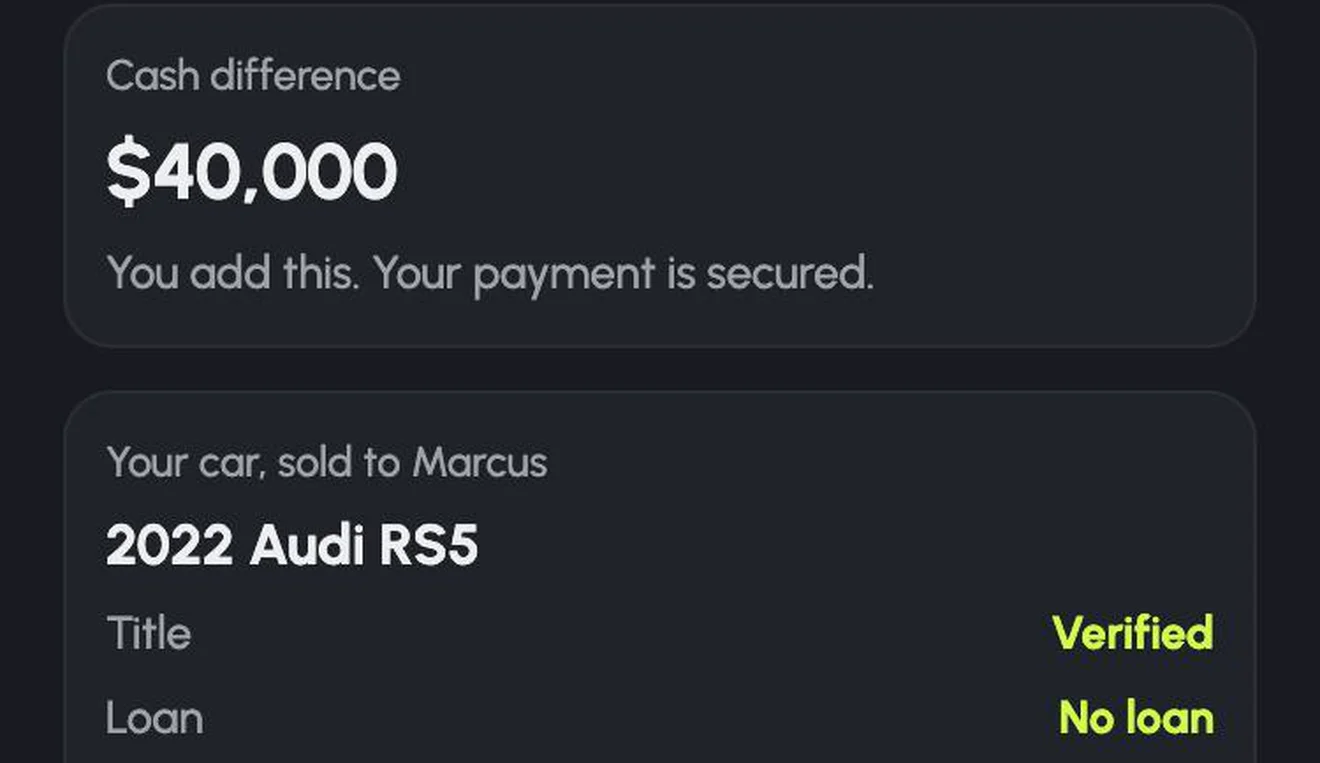
If the other owner is paying you a cash difference, part of that money can go straight to your lender. For example, they owe you $5,000, you owe the bank $5,000, so they pay the lender directly and the lien is released.
Pay it off yourself first
If you have the cash, pay the loan off before the trade, wait for the title (or electronic lien release), and trade with a clean title in hand. This is the simplest option for the other owner, but it can take days or weeks depending on the lender.
Refinance or finance the car you're getting
If you need financing for the car you're receiving, a new loan on that car can be set up to cover your old payoff plus any cash difference, the way dealers roll balances over. Be careful with negative equity: rolling it into a new loan means paying interest on a car you no longer own.
Meet at the lender
Many people complete the payoff at the lender's branch, where funds can be confirmed and the lien release started on the spot. It's also a safe, public place to meet.
What if the other car has a loan?
The same rules apply in reverse. Before you agree anything:
- ask whether there's a loan, and get the lender's name and the payoff amount,
- don't hand over your car or your money until there's a clear plan for releasing their lien,
- make sure any cash you pay goes to the lender (for the payoff) and not only to the owner.
Never accept a title with a lienholder listed unless you have proof the loan was paid. You could end up with a car the bank can repossess.
How Shifta handles loans
Shifta treats loans as part of the shift rather than an awkward conversation. When an offer is accepted and a Secure Shift begins:
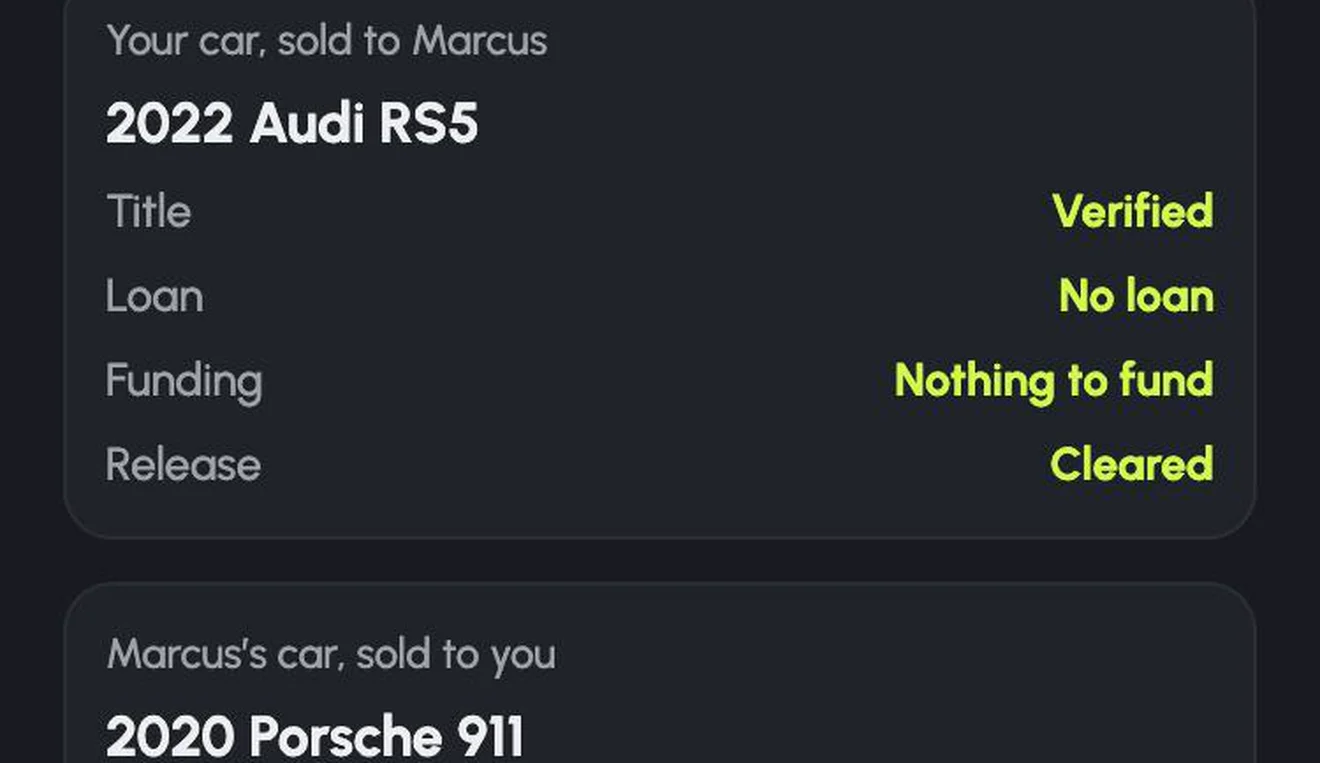
- Readiness checks cover identity, ownership, VINs, titles and loans for both cars, so both owners know about any lien from the start.
- Title and lien verification confirms each title and that any loans are cleared.
- Funding secures the cash difference and any lien payoff before either car is released.
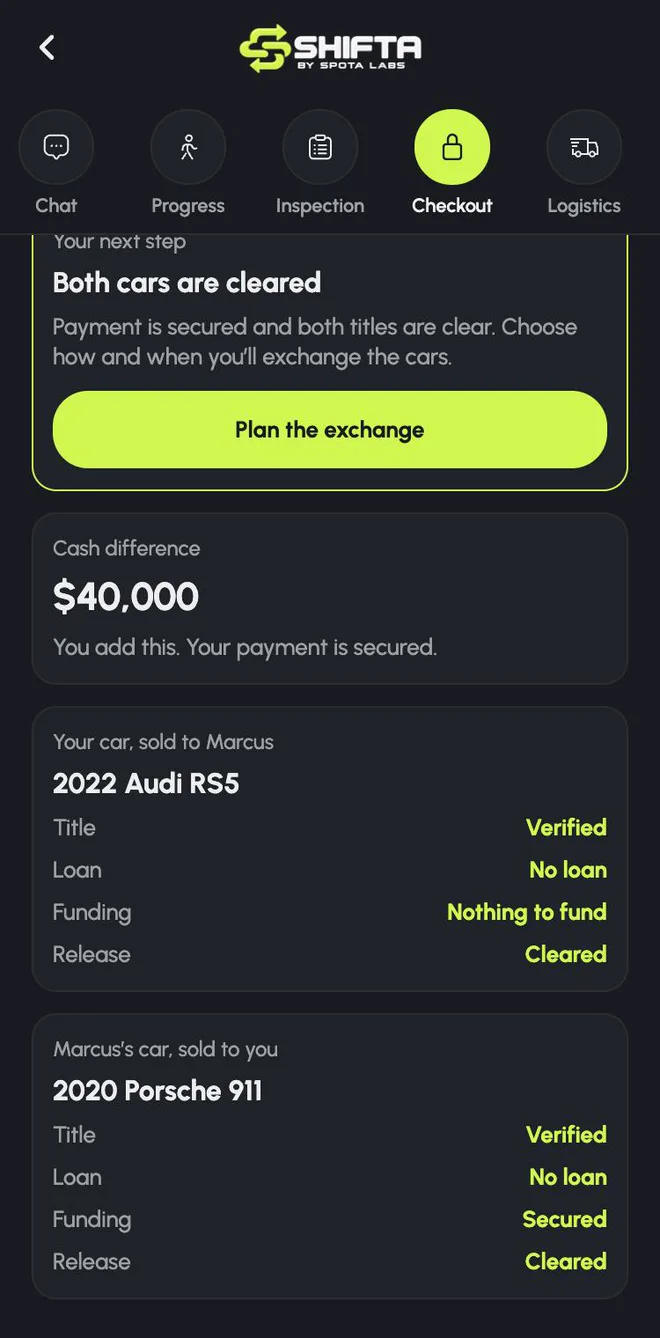
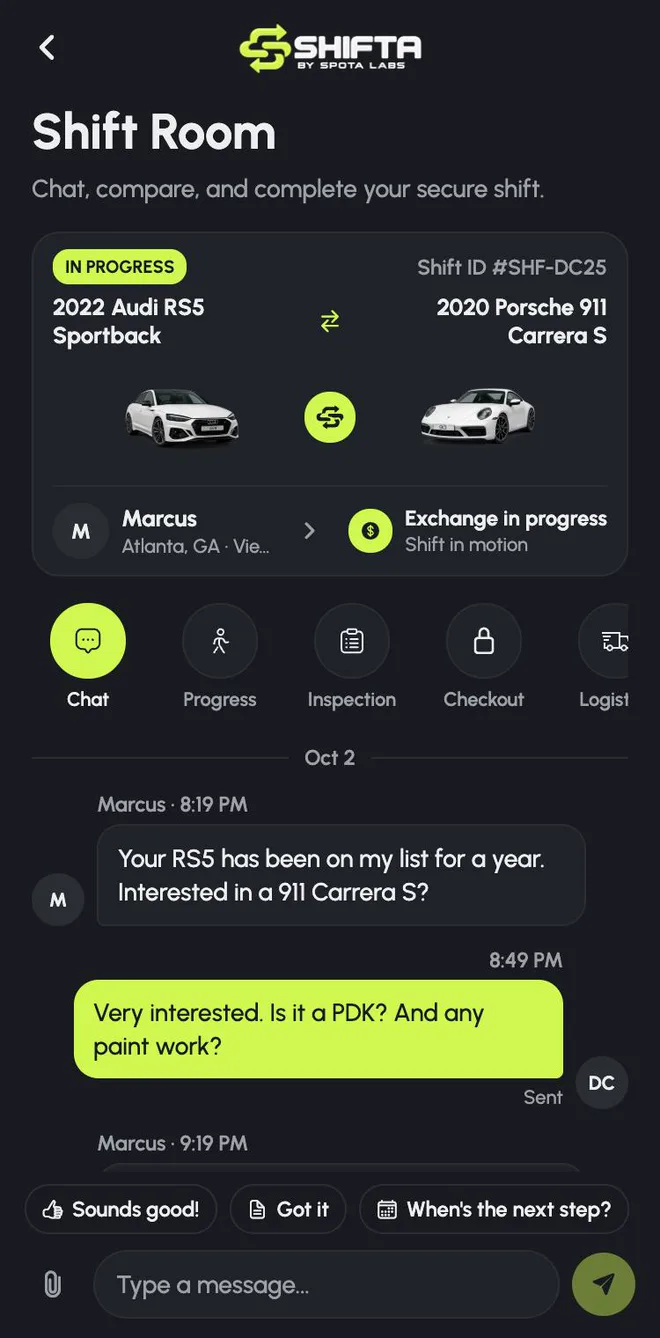
Neither owner hands over keys until both cars are cleared for release.
Quick checklist for trading a financed car
- Get a written payoff quote and the lender's title-release process.
- Know your equity: car value minus payoff.
- Agree who pays the lender, how and when, and write it into the trade agreement.
- Pay the lender directly with traceable funds, not the owner.
- Don't exchange cars until the lien release is under way and confirmed.
- Keep every receipt and the lien release letter.
More on the money side: Trading cars with a cash difference. More on the paperwork: Can you swap cars with someone?
- shifta
- car trade
- car loan
- lien
- guide
ShiftaSkip the sale. Trade into your next car.