Guide5 min read
Trading cars with a cash difference: how to settle the gap fairly
Two cars are almost never worth exactly the same. How to work out a fair cash difference, adjust for condition and history, negotiate without losing the deal, and pay it safely.
 By SpotaLabs Team
Two people want each other's cars. They've talked, they've seen photos, and they're both excited. Then someone says, "So, mine's worth a bit more than yours…" and the whole thing goes quiet.
The cars are rarely the problem in a car trade. The money is. Two cars are almost never worth exactly the same, so most trades involve one person adding cash. Settle that number fairly and quickly, and the trade happens. Argue about whose estimate is right, and it usually doesn't. This guide is about getting to a number you both believe in.
Start from the same kind of value
The most common mistake is comparing different kinds of numbers: your car's dealer retail price against their car's trade-in value, or the asking price you saw online against what a car actually sold for.
Use private-party value for both cars: what a private buyer would realistically pay. Look at the same valuation source for both, for the exact year, trim and mileage, and check recent sold prices for similar cars nearby.
The difference between those two numbers is your starting point, not your answer.
Adjust for what actually changes value
Then adjust each car, honestly, for the things that move real-world value:
- Condition. Paint, interior wear, curb rash, windshield chips. An inspection report makes this objective.
- Tires and brakes. A fresh set of tires or a recent brake job is worth real money. Bald tires are a cost the other owner inherits.
- Service history. A full record, especially for big items like timing belts, clutches or major services, supports a higher value.
- Accident history and title. A clean history report and clean title matter. A reported accident usually lowers value even when it was repaired well.
- Modifications. Mods rarely add as much value as they cost, and some reduce it. Original parts included can help.
- Spec and desirability. A manual in a model where enthusiasts want manuals, a rare color, a desirable package.
- What's included. Spare keys, a second set of wheels, a remaining warranty or a prepaid service plan.
Write the adjustments down for both cars. It keeps the conversation about the cars rather than about who's being unreasonable.
Negotiating the gap
A few things make the money conversation easier:
- Share your reasoning, not just your number. "Mine has new tires and a full dealer history, so I've added $800" is easy to respond to. "Mine's worth more" isn't.
- Make the first offer realistic. An aggressive opening anchors the other person against you, and in a trade they can just walk away.
- Trade terms, not only dollars. An inspection at their preferred shop, including the winter wheels, or flexible timing can bridge a gap without money.
- Know your limit before you start. Decide the most you'll add, or the least you'll accept, and stick to it.
- Get it in writing. Once you agree, write down both cars, both values, the difference, who pays it and what's included.
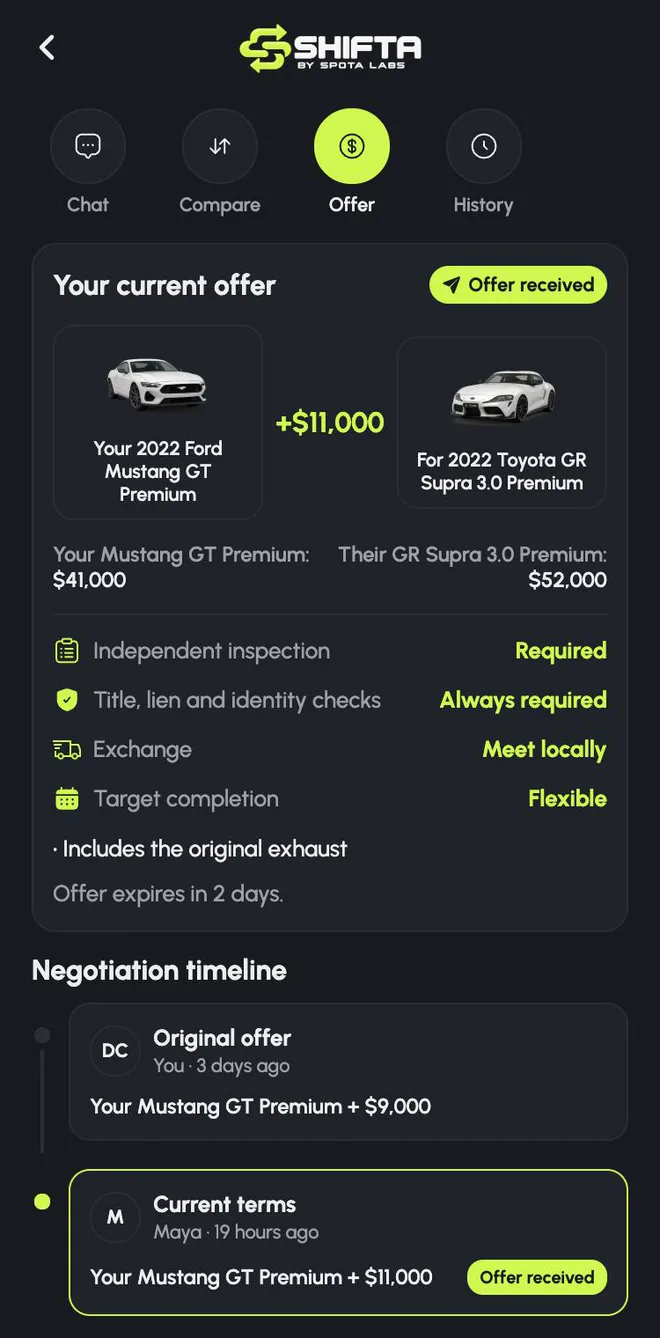
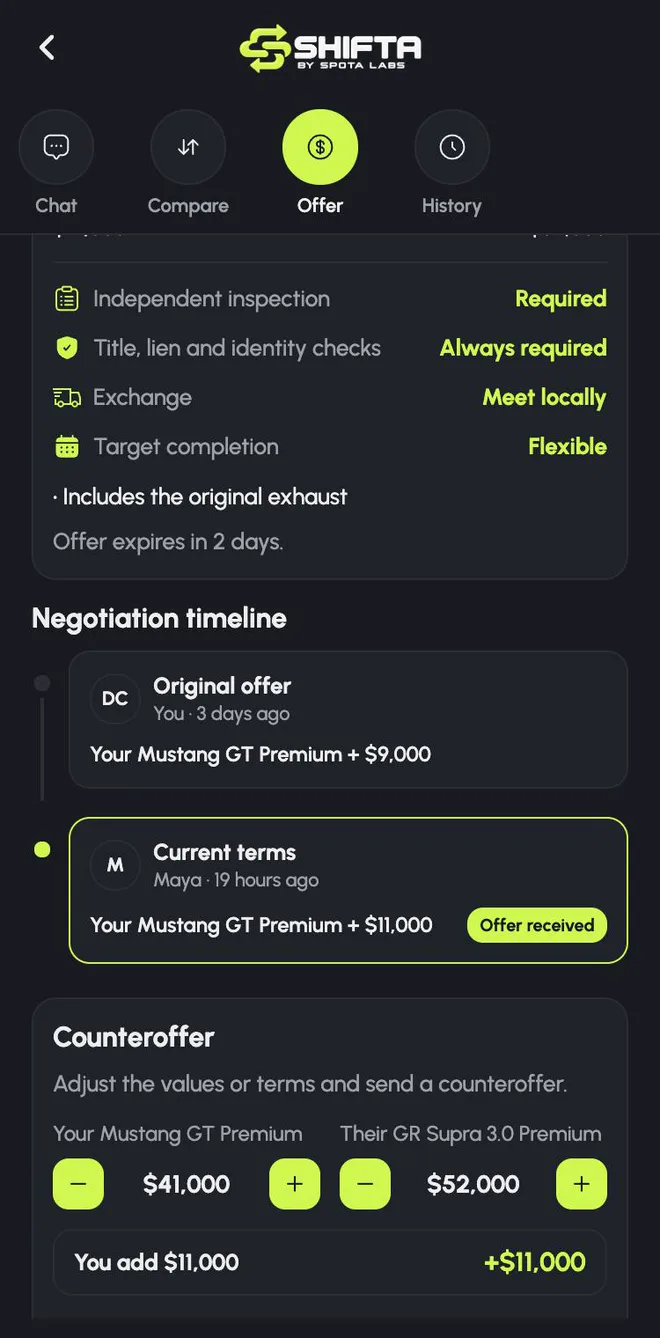
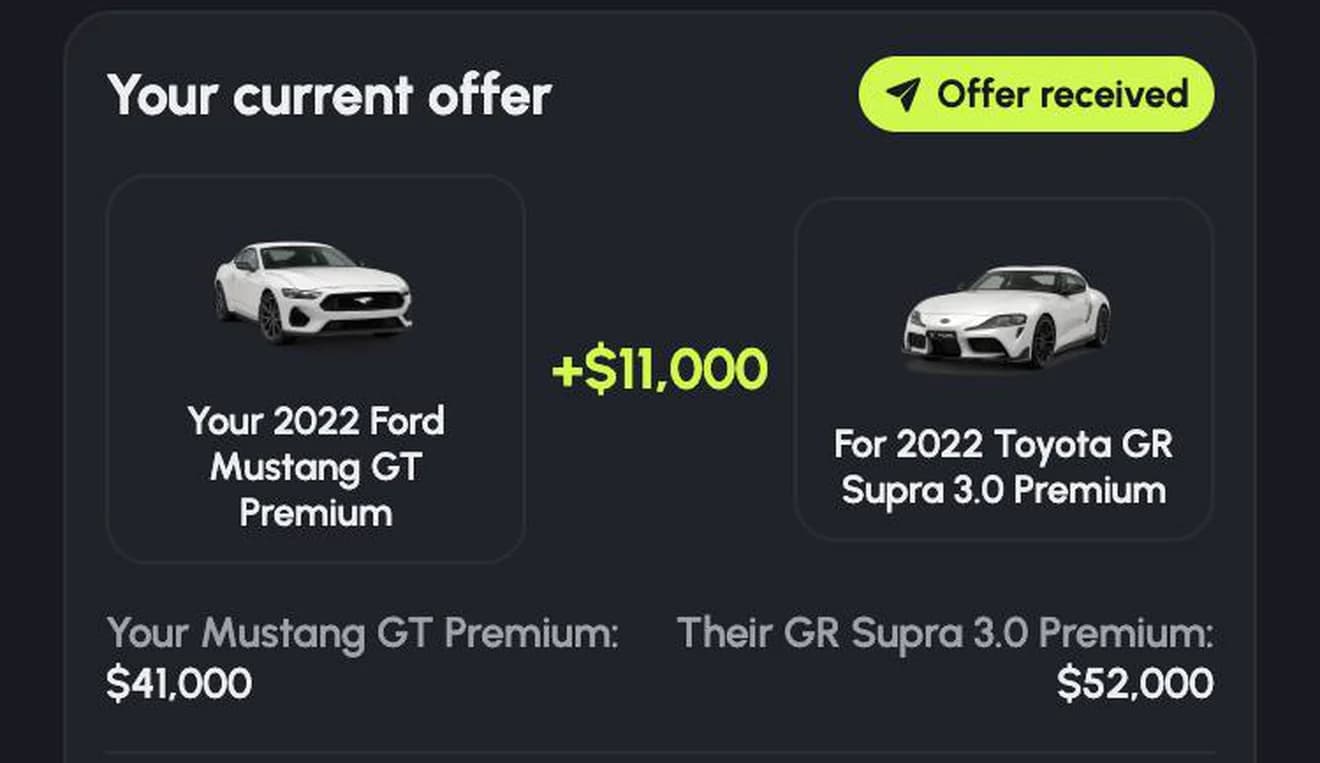
In Shifta, offers live in the Shift Room. An offer sets a value for each car, so the cash difference follows from the values instead of being a number someone made up. It also covers whether an independent inspection is required, how the exchange will happen and the target completion date. The other owner can accept, decline or counter, and every version stays in the negotiation timeline. Nothing gets lost in a chat thread.
Know your own limits up front
Before you start matching, it helps to decide how much cash you're prepared to put in, and whether you'd take cash back for a less expensive car. Shifta asks this when you set up your preferences: an even trade only, up to $5,000, $10,000 or $20,000, flexible, or a custom amount. Taking cash back is a separate choice.
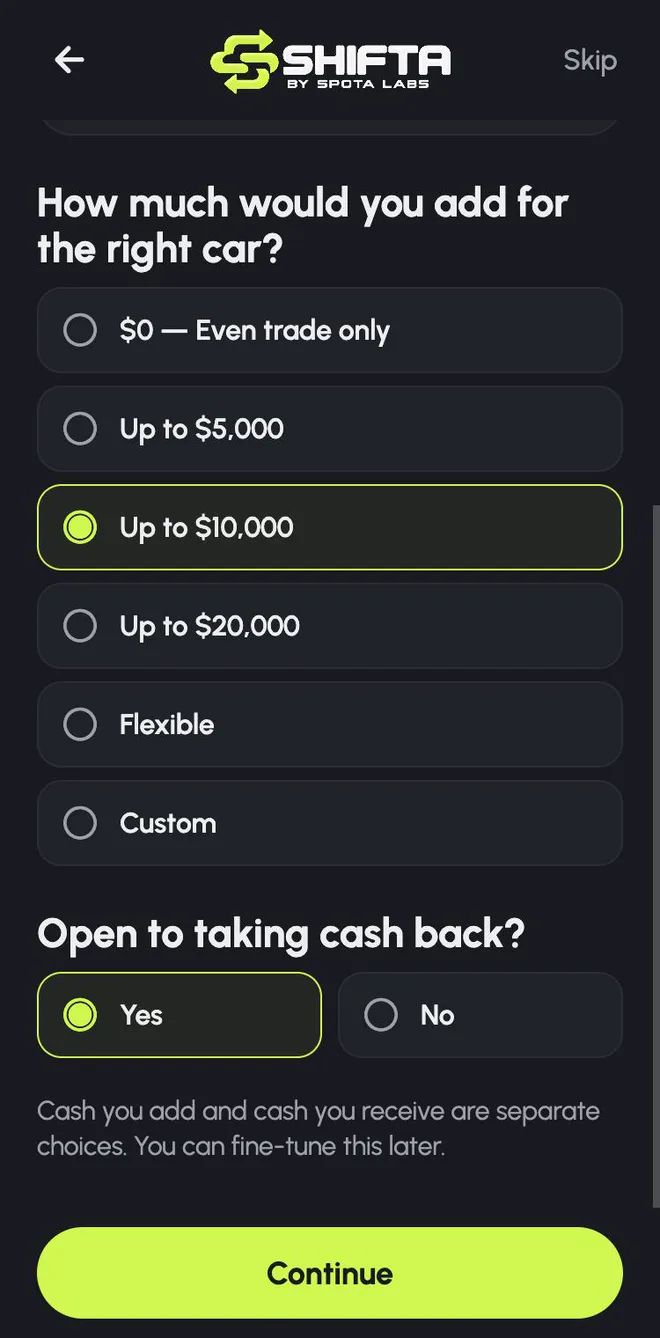
Matching uses those limits on both sides. You won't be shown a car that would need $25,000 from you when you said $10,000, and the other owner won't be shown your car if the gap doesn't work for them either.
Paying the difference safely
Once you've agreed, pay the difference in a way that's traceable and that can't be reversed after the cars are gone:
- Avoid cash for anything but small amounts. It's hard to prove and risky to carry.
- Be careful with cashier's checks. Fake ones are a common scam. If you accept one, meet at the issuing bank and have the teller verify it.
- A bank transfer or wire, confirmed in the receiving account before the handoff, is usually the cleanest option.
- Never release your car until the money has actually arrived, not just "been sent".
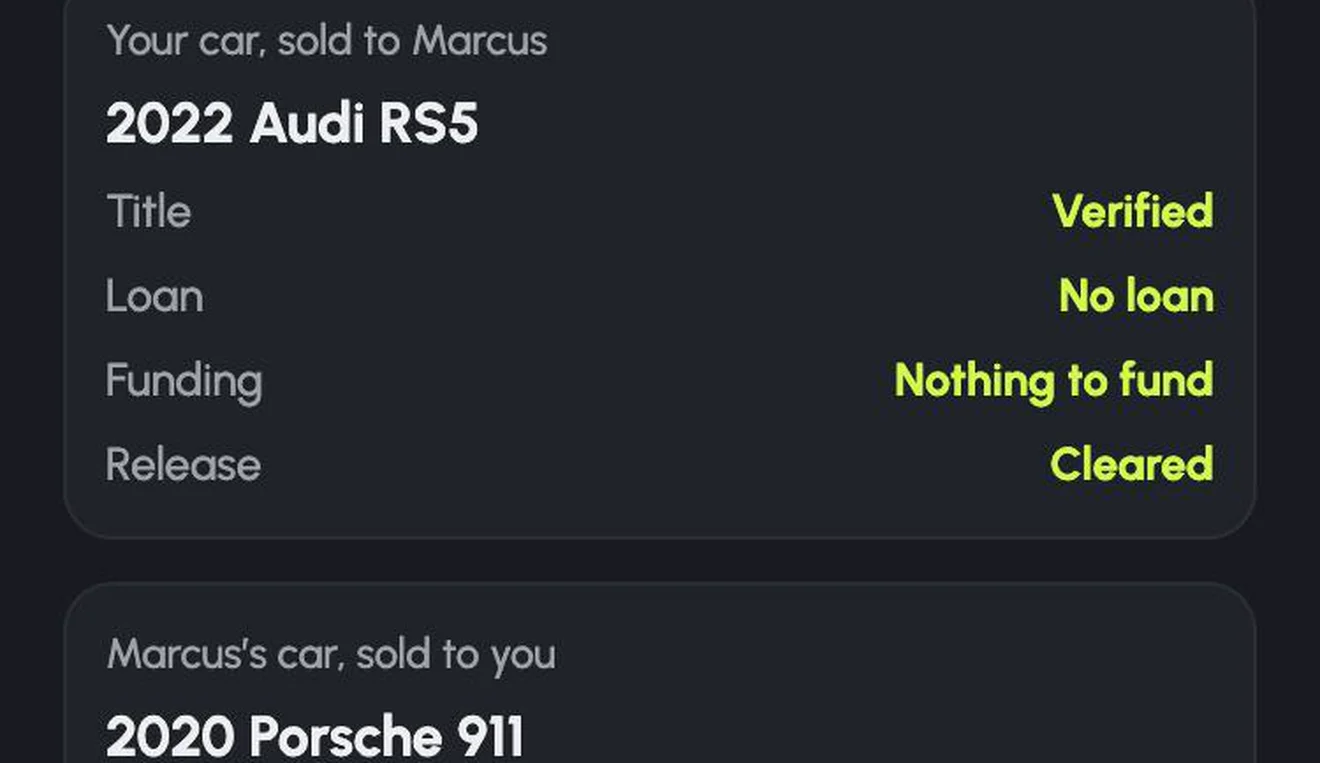
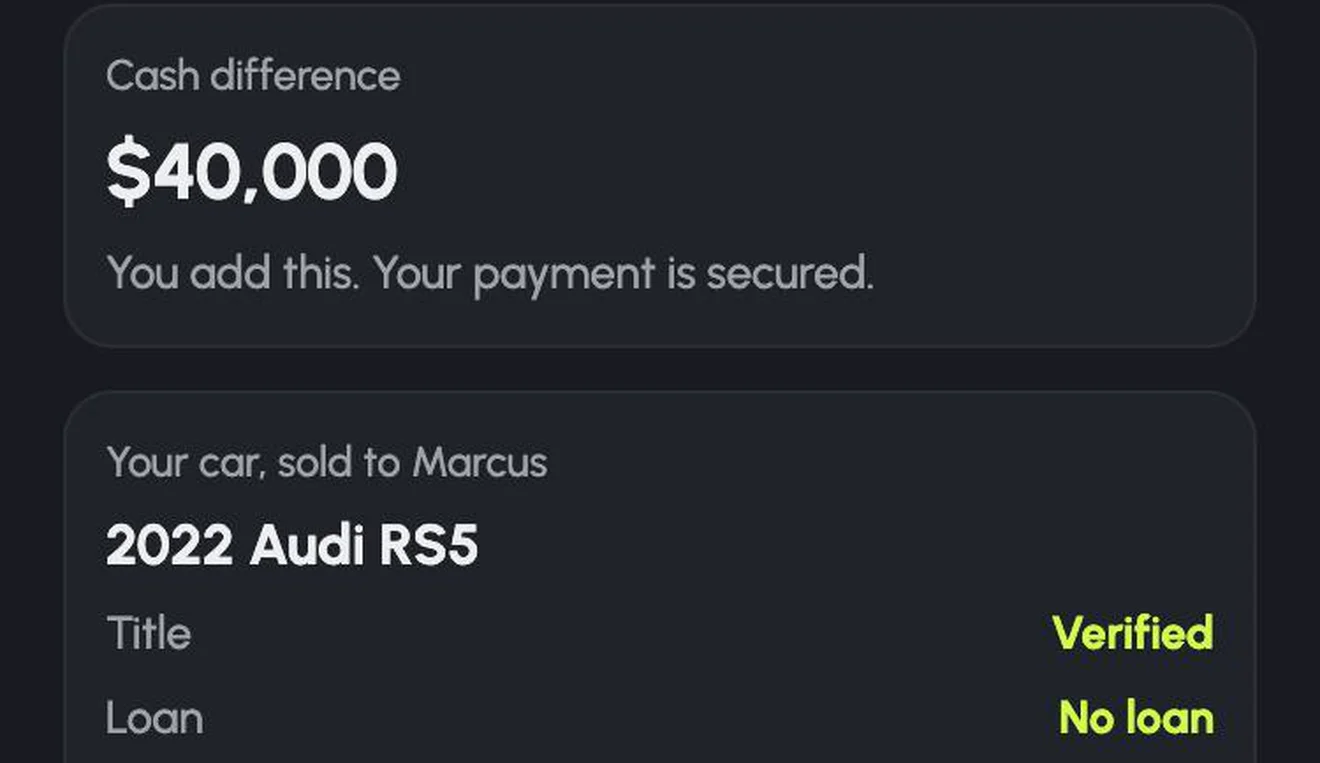
In a Secure Shift, the cash difference is secured as part of checkout before either car is released, so neither owner has to hand over keys on trust.
When the gap is too big
Sometimes the numbers just don't work, and that's fine. If you're consistently a long way apart, look at the assumptions: Are you both using private-party values? Has an inspection changed the picture? Would a slightly different car, or a slightly wider search area, close the gap?
Shifta's Match Watch can show you which changes would open up more matches, like allowing a larger cash range or searching a wider radius, and counts how many owners each change would add.
- shifta
- car trade
- cash difference
- negotiation
- guide
ShiftaSkip the sale. Trade into your next car.