Guide5 min read
Can you swap cars with someone? Legality, title transfer and paperwork
Yes, trading cars with another person is legal. Here's how the title transfer, bill of sale, registration, insurance and loans work when two owners exchange cars, and the mistakes that cause trouble later.
 By SpotaLabs Team
It's one of the most searched questions about trading cars: can you just swap cars with someone? The short answer is yes. In the US, two private owners can legally trade vehicles, with or without cash changing hands. In the eyes of the DMV, a trade is simply two sales happening at the same time: you sell your car to them, and they sell theirs to you.
That framing makes the paperwork much easier to understand. Everything you'd do to sell a car privately, you do once for each car. This guide walks through it.
What makes a trade legal
A private car trade is legal when:
- each person owns the car they're giving (their name is on the title), or has the lender's cooperation if there's a loan,
- the titles are signed over correctly, with accurate odometer readings,
- each person registers the car they receive and pays any tax or fees due, within your state's deadline,
- neither person misrepresents the car: its history, its condition, or its mileage.
What makes a trade go wrong is almost never the trade itself. It's a missing signature, a lien nobody mentioned, or a title that isn't what it seemed.
Paperwork for each car
1. The title
The title is the proof of ownership, and it's the document that matters most. For each car:
- Check the name on the title matches the person's ID.
- Check the VIN on the title matches the car (dashboard, through the windshield, and the door jamb sticker).
- Look for brands like salvage, rebuilt, flood or lemon buyback.
- Check for a lienholder. If a bank is listed and the loan isn't paid off, the owner can't sign the title over on their own.
At the exchange, each owner signs the seller section of their title, and the other person signs as buyer. Fill in the odometer reading where required. Federal law requires a mileage disclosure for most cars, and states usually build it into the title. Don't leave fields blank, and don't use correction fluid. A spoiled title can mean a trip to the DMV for a duplicate.
2. A bill of sale
Many states require a bill of sale, and it's a good idea everywhere. For a trade, write one for each car, or a single trade agreement covering both. Include:
- names and addresses of both people,
- year, make, model and VIN of both cars,
- odometer readings,
- the agreed value of each car and any cash paid, and by whom,
- the date, and "sold as is" if that's what you agreed,
- both signatures.
Some states have their own bill of sale form, and some have specific rules for an even exchange where no money changes hands. In Texas, for example, an even exchange between private owners is taxed at a flat $5 instead of a percentage of the car's value, and each car is documented on its own title application.
3. Registration and plates
After the trade, each person registers the car they received in their own name. Deadlines vary, often between 10 and 30 days. Whether license plates stay with the car or with the owner also depends on the state, so check before you move plates or take yours off.
4. Insurance
Call your insurer before you drive the new car away. Many policies give you a short grace period for a newly acquired car, but don't assume. Cancel or move the policy on the car you traded only once you no longer own it.
5. Release of liability
Many states let the seller file a "notice of transfer" or "release of liability" after the sale. Do it for the car you gave away. It protects you from tickets, tolls or accidents involving that car after the handoff.
What about cars with loans?
You can trade a car that still has a loan on it, but the lender holds the title, so the loan has to be dealt with as part of the trade. Usually that means paying it off at the exchange so the lender releases the title. We cover the options in Can you trade a car you still owe money on?
Taxes
Because each car is technically sold, each person may owe sales or use tax on the car they receive when they register it. How it's calculated varies widely by state. See Do you pay sales tax when you trade cars privately?
How Shifta handles the paperwork side
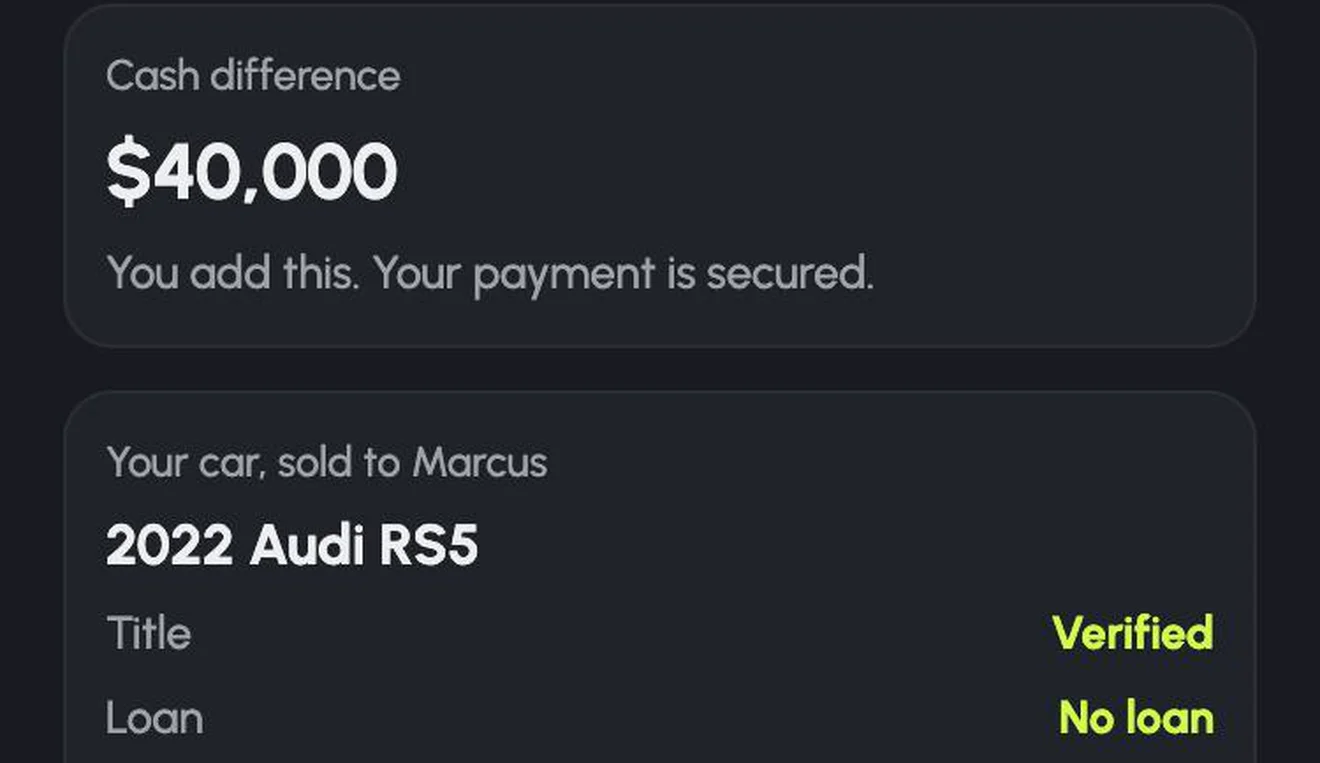
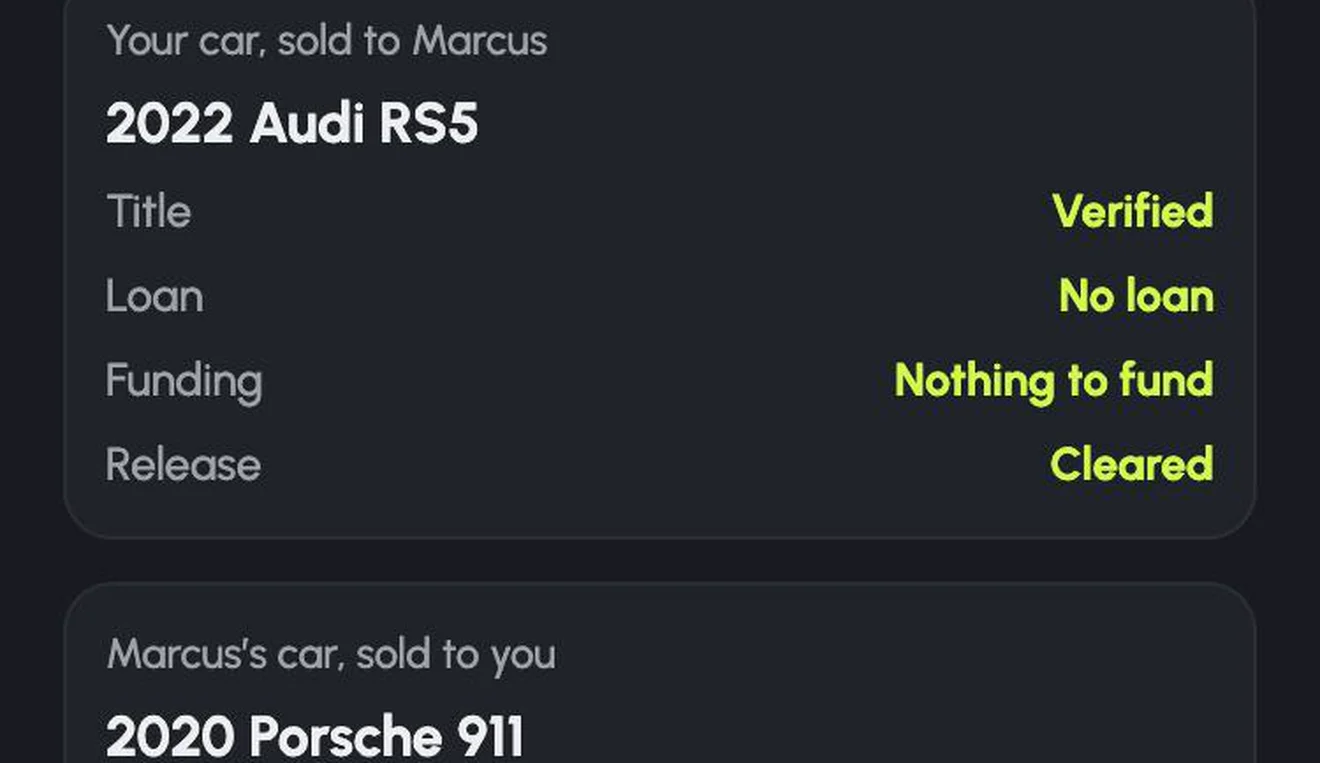
In Shifta, the checks happen before the cars do. Once both owners accept an offer, the shift becomes a Secure Shift and Shifta tracks:
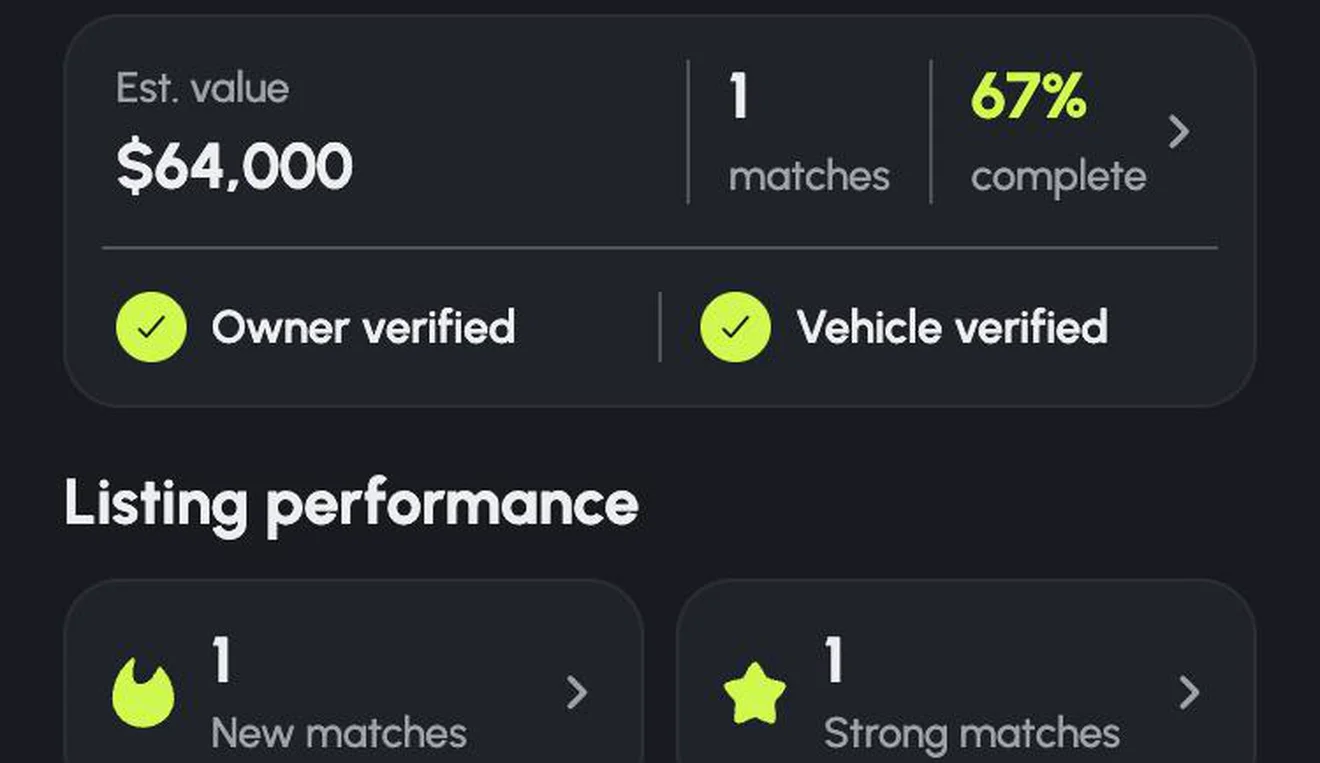
- Identity and ownership for both owners and both cars,
- title and lien verification, including clearing any loans,
- funding of the cash difference,
- the exchange itself, with both owners confirming each handoff,
- and the title and registration transfer afterwards.
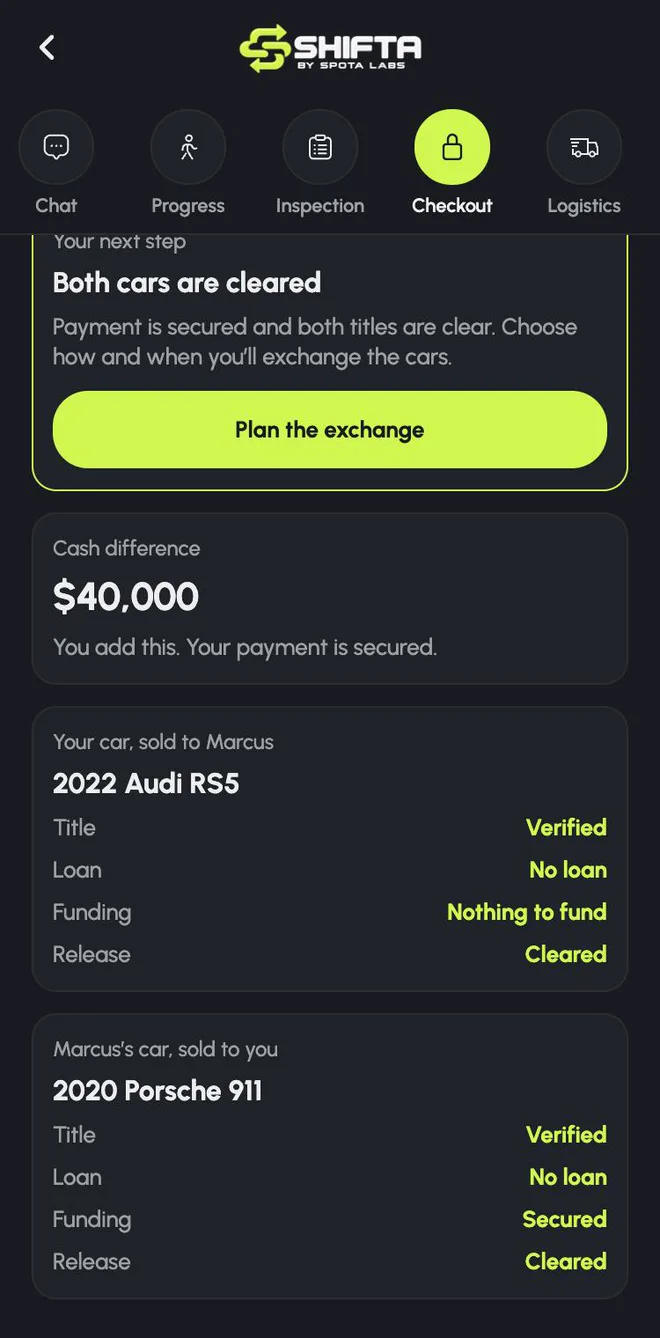
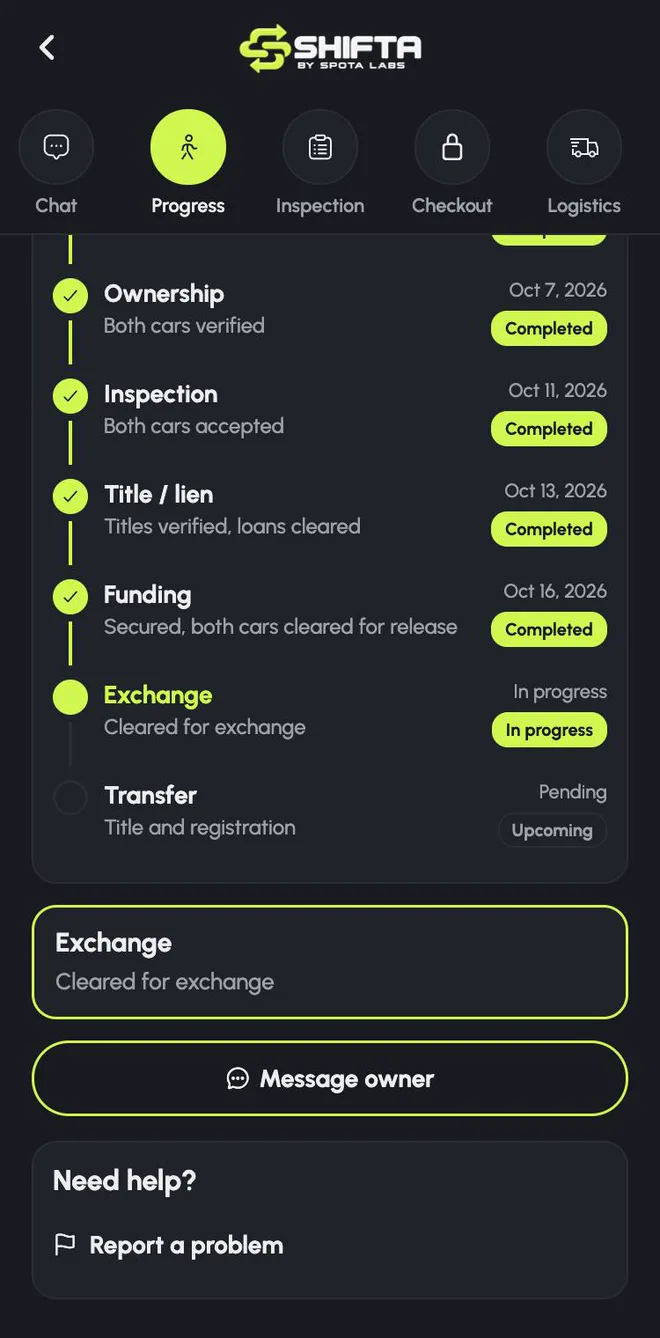
You still sign the documents your state requires. Shifta makes sure both sides have done the checks before anyone hands over keys.
Want the whole process from the start? Read How to trade your car for another car without a dealer.
- shifta
- car trade
- title transfer
- paperwork
- guide
ShiftaSkip the sale. Trade into your next car.