Guide7 min read
How to trade your car for another car without a dealer
A complete guide to trading cars privately: finding someone who wants your car and has one you want, agreeing a fair value, checking the car and the paperwork, and handing over the keys safely.
 By SpotaLabs Team

You want a different car. You already own one that's worth real money. The usual path is to hand it to a dealer as a trade-in, buy something from their lot, and accept whatever numbers they put in front of you. It's easy, and it's almost always the most expensive way to do it.
There's another option people have used for as long as there have been cars: trade directly with another owner. You give them your car, they give you theirs, and whoever's car is worth more gets paid the difference. No dealer margin on either side. This guide walks through how to do that properly, from finding the right person to the moment you drive away in your new car.
Why trade privately at all?
A dealer has to make money twice in a trade-in deal. It buys your car below what a private buyer would pay, because it needs room to recondition and resell it. Then it sells you its car above what a private seller would ask, because the price covers overhead and profit. Neither margin is a scam. It's how the business works. But when you trade with another owner, both margins disappear, and that money stays with the two of you.
Private trades also suit people who know what they want. A dealer's lot has whatever it happens to have. Another owner might have exactly the spec, color and history you've been looking for, and might want exactly the car you're ready to move on from.
We wrote a whole article on the numbers: Dealership trade-in vs trading privately: how much are you leaving on the table?
Step 1: Know what your car is worth
Before you talk to anyone, get a realistic idea of your car's private-party value. That's what a private buyer would pay, not the dealer trade-in figure and not the dealer retail price. Look at:
- valuation guides for your exact year, make, model, trim and mileage,
- recent sold prices (not asking prices) for similar cars near you,
- anything that moves the number: condition, service history, accident history, modifications, tires, and how desirable the spec is.
Be honest with yourself here. The most common reason private trades fall apart is an owner who's anchored on what they hope their car is worth.
Step 2: Decide what you'd accept
A trade only works if both people get something they want. Before you start looking, write down:
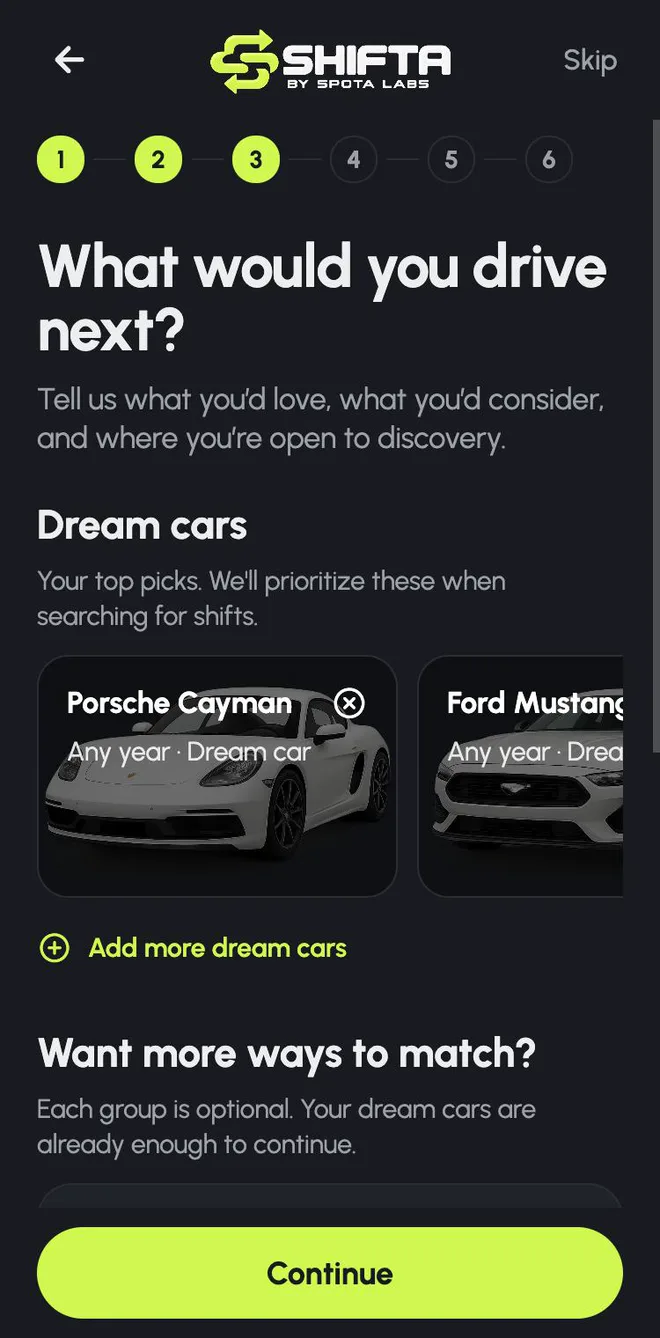
- The cars you'd jump at, your dream cars, plus a few you'd happily consider.
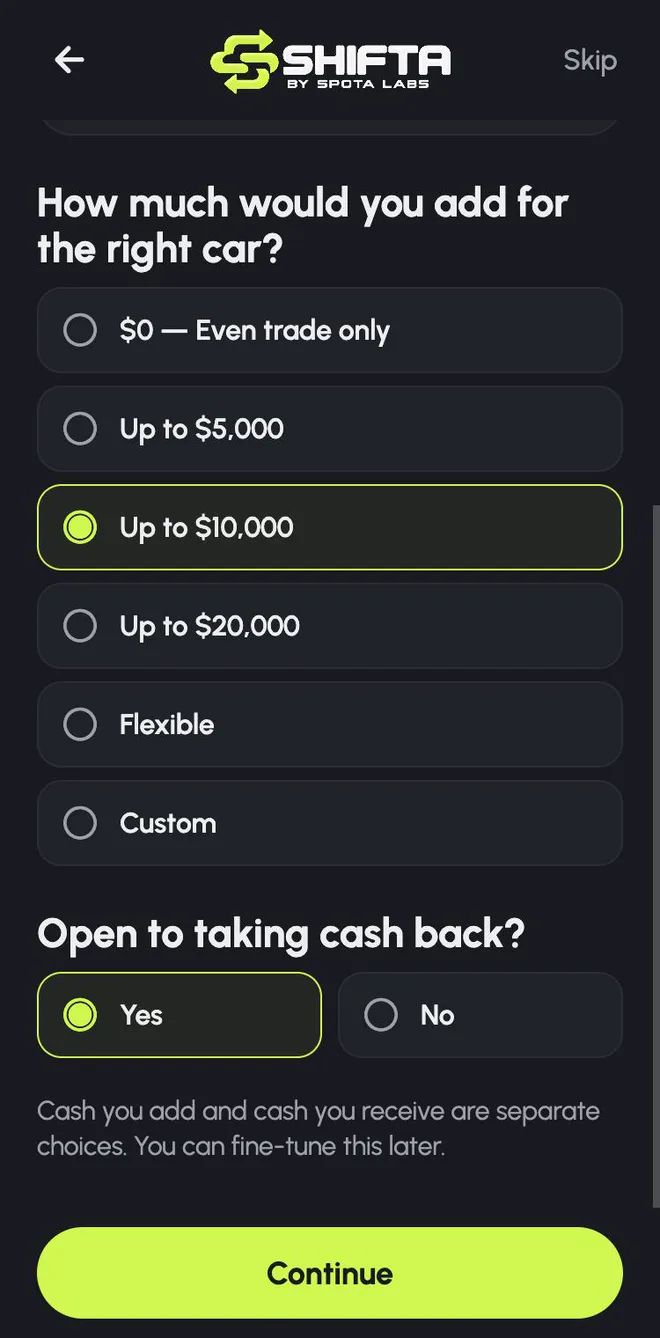
- How much cash you'd add to get the right car, and whether you'd accept cash back for a cheaper one.
- How far you'd travel to see and collect a car, and whether you'd consider shipping.
- Your deal breakers: salvage titles, accident history, high mileage, heavy modifications, a manual (or an automatic).
Step 3: Find someone whose wants match yours
This is the hard part, and it's why most people give up and go to a dealer. For a trade to work, you need someone who has a car you want and wants a car like yours, at roughly the same time, close enough to meet. Economists call it the "double coincidence of wants".
The traditional ways to find that person are classified ads marked "open to trades", enthusiast forums, Facebook groups and word of mouth. They can work, but you're mostly scrolling and hoping. We compare the options in Where to trade cars.
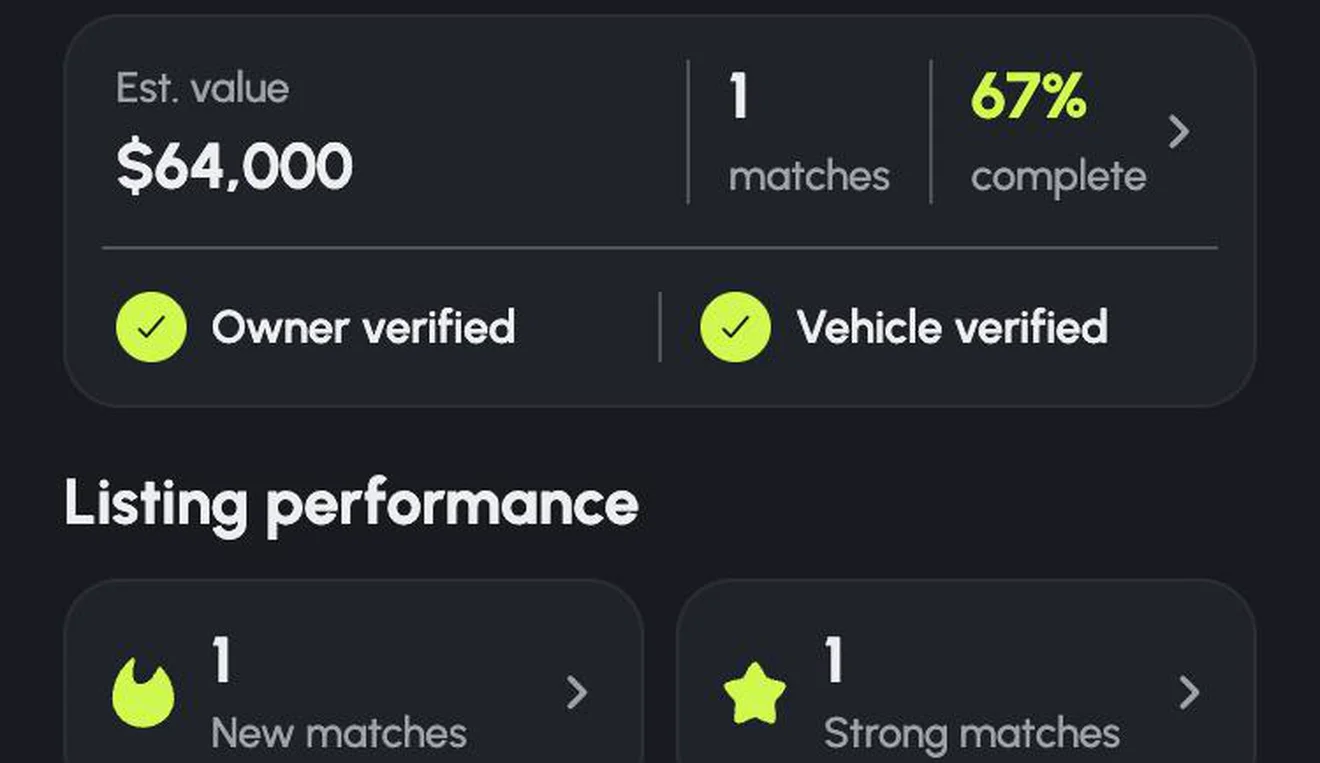
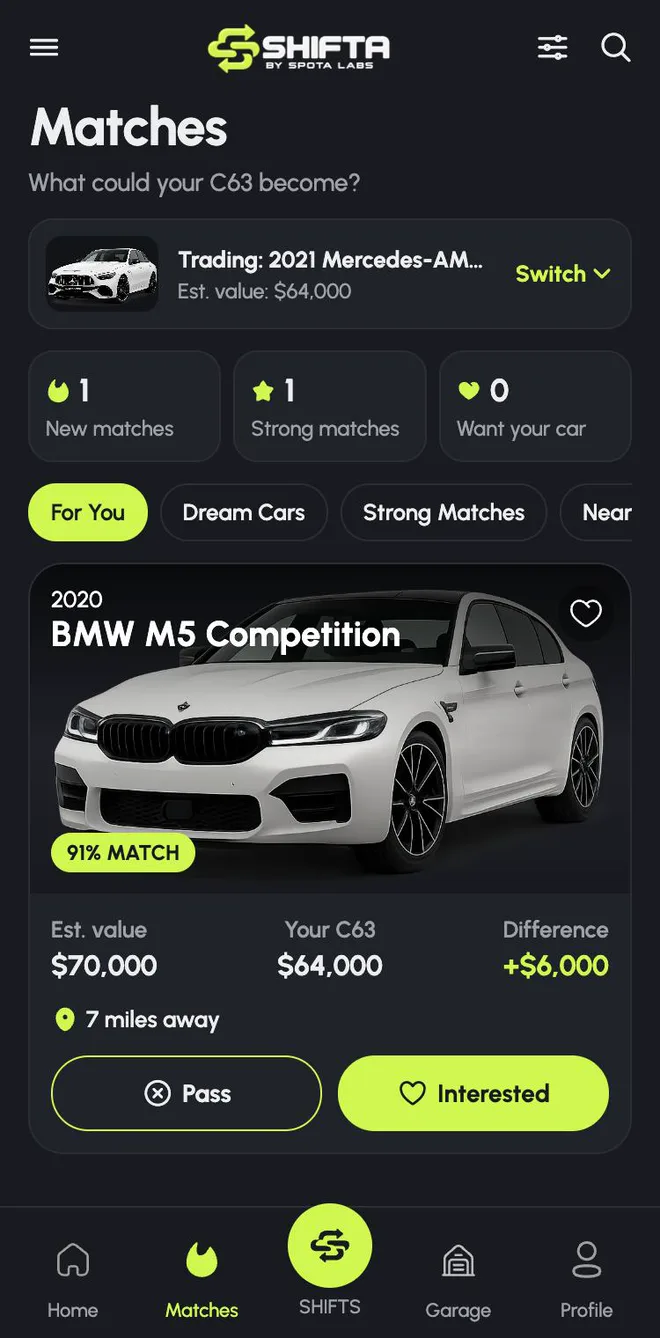
Shifta was built specifically for this step. You add your car and what you'd accept, and Shifta looks for reciprocal matches: owners whose car fits your preferences and whose preferences fit your car. Each match shows both estimated values and the difference, so you know where you stand before anyone says a word.
Step 4: Talk before you commit
Once you've found a likely trade, have a proper conversation before anyone talks numbers. Ask about:
- Ownership and title. Is the title in their name? Is there a loan on the car?
- History. Service records, accidents, paintwork, warranty work, how long they've owned it.
- Modifications. What's been changed, and do they still have the original parts?
- Why they're trading. Usually it's a simple answer, like a growing family, a new commute, or just wanting something different.
Keep the conversation in writing where you can. In Shifta that's the chat inside the Shift Room, which opens once you both tap Interested.
Step 5: Agree the value and the cash difference
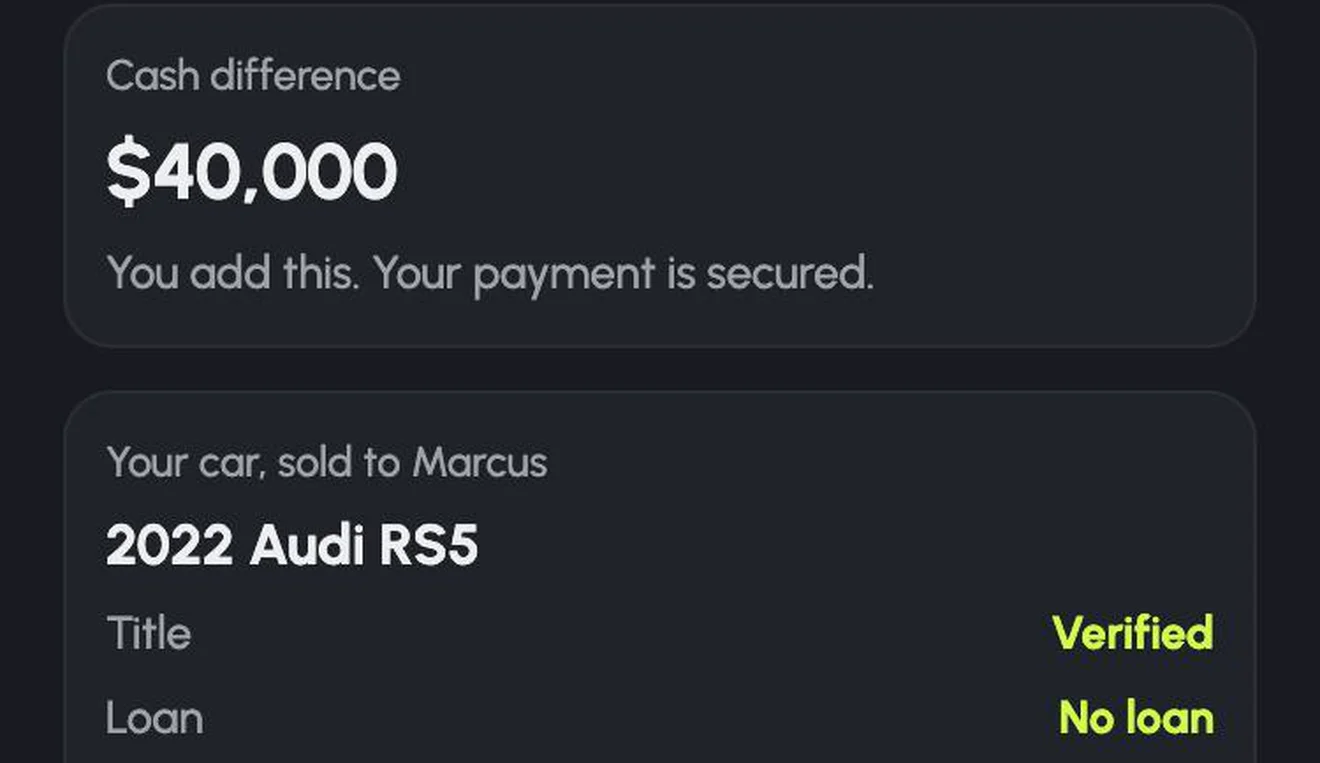
Start from each car's realistic private-party value, not from a number either of you likes. The difference between those values is the starting point for the cash difference. Then adjust for anything that genuinely changes value: condition, recent work, tires, modifications, history.
Write the agreement down: both cars, both values, the cash difference and who pays it, what's included (spare keys, original parts, winter wheels), and how the exchange will happen. Our guide to trading cars with a cash difference goes into detail.
Step 6: Inspect both cars
Each car should be checked by someone independent before anyone hands over keys. A pre-purchase inspection from an independent mechanic or mobile inspector is cheap insurance against expensive surprises. Run a vehicle history report on the VIN too.
Both people should see both reports. If something unexpected turns up, you can renegotiate, or walk away, before anything is final.
Step 7: Check the paperwork
This is where private trades go wrong when they go wrong. Before money or keys change hands:
- Match the VIN on the car (dashboard and door jamb) to the title and registration.
- Check the title is in the other person's name, and look for brands like salvage, rebuilt or flood.
- Check for liens. If either car has a loan, the lender holds the title, and the loan has to be paid off or transferred as part of the deal. See Can you trade a car you still owe money on?
- Prepare a bill of sale for each car (many states have a standard form), listing both vehicles, the agreed values and any cash.
Step 8: Exchange, then transfer
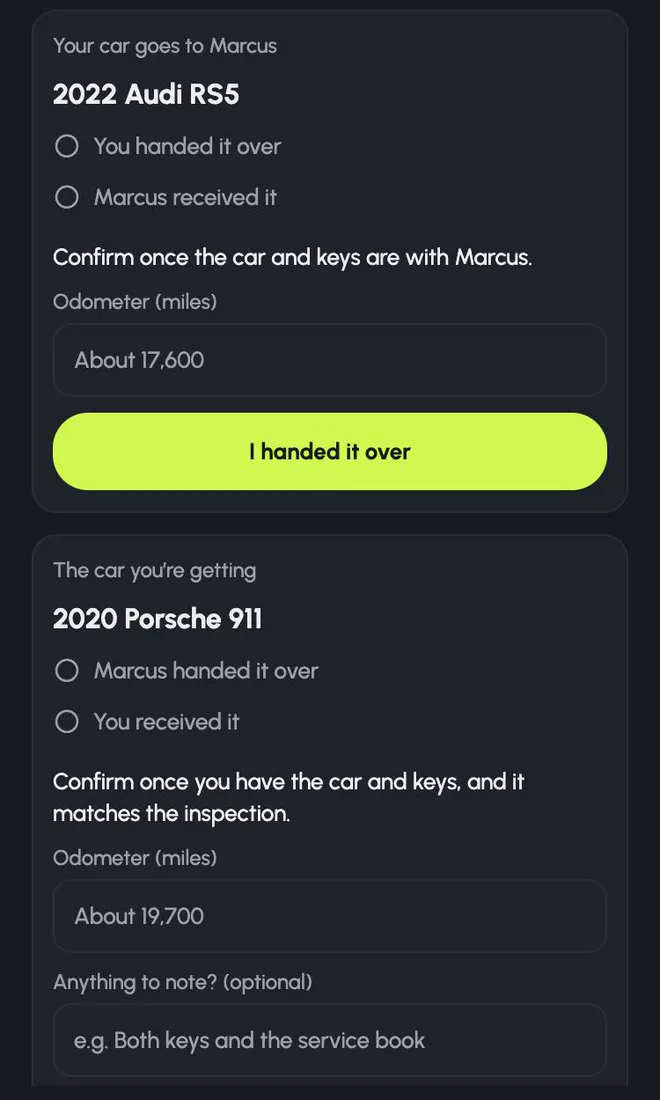
Meet somewhere safe, in daylight. A bank or a police station's "safe exchange zone" are popular choices. Check each car matches what was inspected, confirm the odometer readings, settle the cash difference through a traceable method, and sign both titles over.
Then each of you registers the car you received, pays any tax due, and sorts out insurance before driving away. The details vary by state. Our guide Can you swap cars with someone? covers the paperwork, and sales tax on a private car trade covers the tax.
How Shifta handles the hard parts
Everything above can be done by hand. Shifta exists to make it faster and safer:
- Matching. Reciprocal matches instead of endless scrolling, plus Match Watch to keep looking for you.
- Value. Estimated values for both cars and the difference, side by side, plus a comparison with a typical dealership deal.
- The Shift Room. Chat, compare, make offers and counteroffers, and keep the whole history in one place.
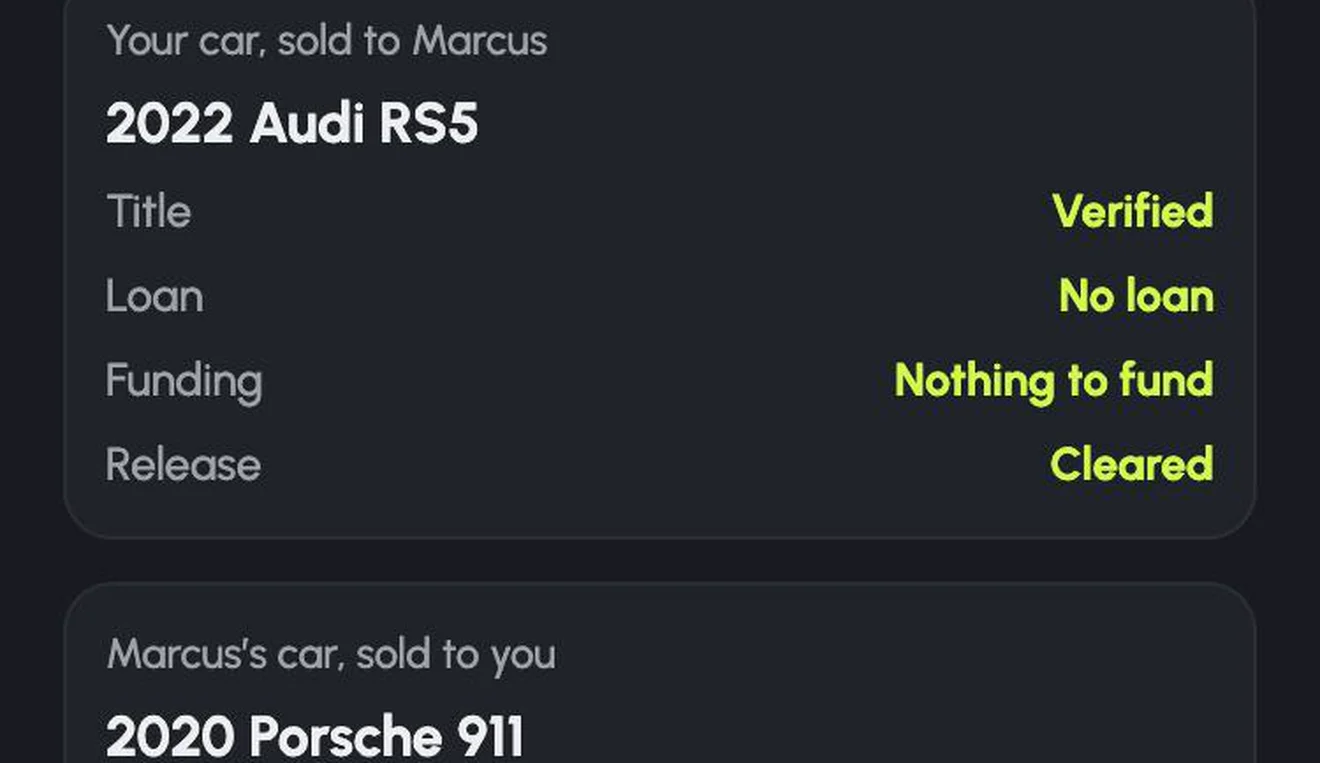
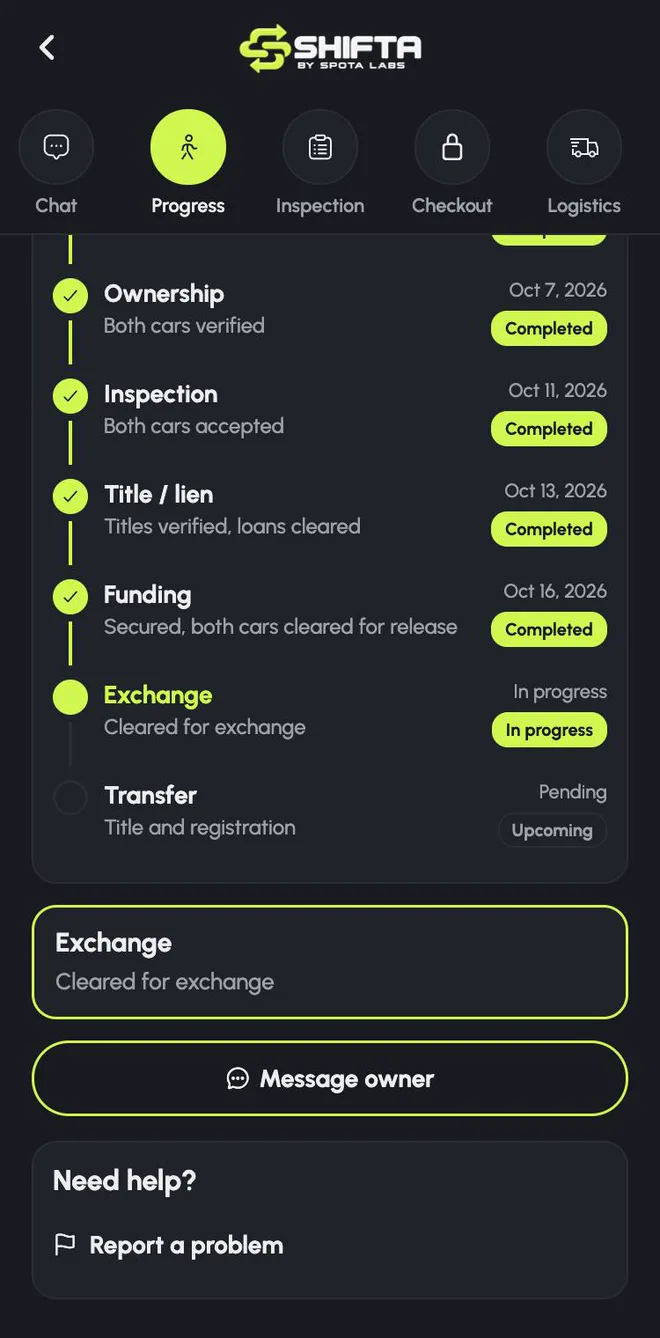
- Secure Shift. Once an offer is accepted, both cars are reserved, and identity, ownership, title and lien checks, inspections, funding and the handoff are tracked step by step.
- shifta
- car trade
- private trade
- trade-in
- guide
ShiftaSkip the sale. Trade into your next car.