Guide4 min read
Trade up, down or sideways: when trading your car beats selling it
Sports car for an SUV, truck for a daily driver, EV for gas, or just something different. Real-life reasons people trade cars, how the money usually works in each case, and how to find the other owner.
 By SpotaLabs Team
Nobody trades a car for the sake of it. People trade because their life changed, their commute changed, or they've simply had their fun with one car and want to try another. And for a surprising number of those situations, there's someone out there whose life changed in exactly the opposite direction.
That's what makes trading work. Here are the most common reasons people trade cars, how the money tends to work in each, and what to look out for.
Trading a sports car for an SUV (and back)
The story: a new baby, a dog, a move to the suburbs. The two-seater that was perfect for weekend drives now sits in the garage while you borrow your partner's car for the school run.
The other side: someone whose kids just left home, and who's finally ready for the car they wanted at 25. Or an SUV owner who's tired of driving a living room.
The money: often surprisingly even. Desirable sports cars hold their value well, and a well-specced family SUV is worth similar money. Expect a modest cash difference either way.
Watch out for: car seats and cargo. Measure the trunk and check the LATCH anchors before you agree anything.
Trading a truck for a daily driver
The story: the project house is finished, or you've stopped towing the boat. A full-size truck is expensive to fuel and hard to park every day.
The other side: someone starting a business, buying land or getting into towing, who needs a truck and would happily give up a sensible sedan or crossover.
The money: trucks hold value well, so the truck owner often receives cash. That can be a nice bonus when you're stepping down.
Watch out for: towing wear. Ask about hitch use, check the transmission and brakes, and look for a tow package or a wear history.
Trading an EV for gas (or gas for an EV)
The story: an EV owner who's moved somewhere without home charging, or who's started doing long road trips. Or a gas-car owner whose new job has charging at the office.
The other side: exactly the opposite situation, which is surprisingly common.
The money: used EV values move faster than gas cars, depending on battery health, incentives and new-model pricing. Agree on a value from recent private sales, not from what you paid.
Watch out for: battery health. Ask for a battery report or state-of-health reading, and check remaining battery warranty.
Trading up
The story: you've got a bit more budget now, and you want more car: a higher trim, a faster model, a newer year.
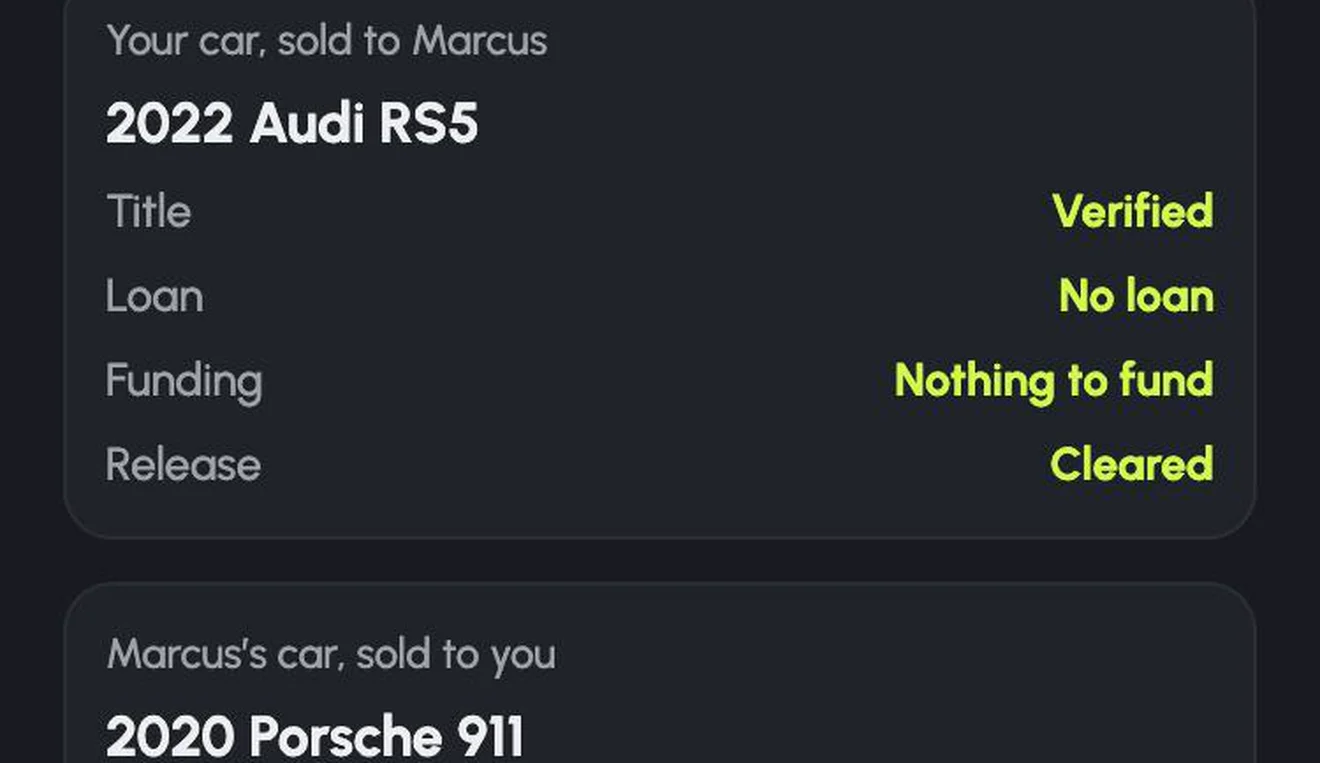
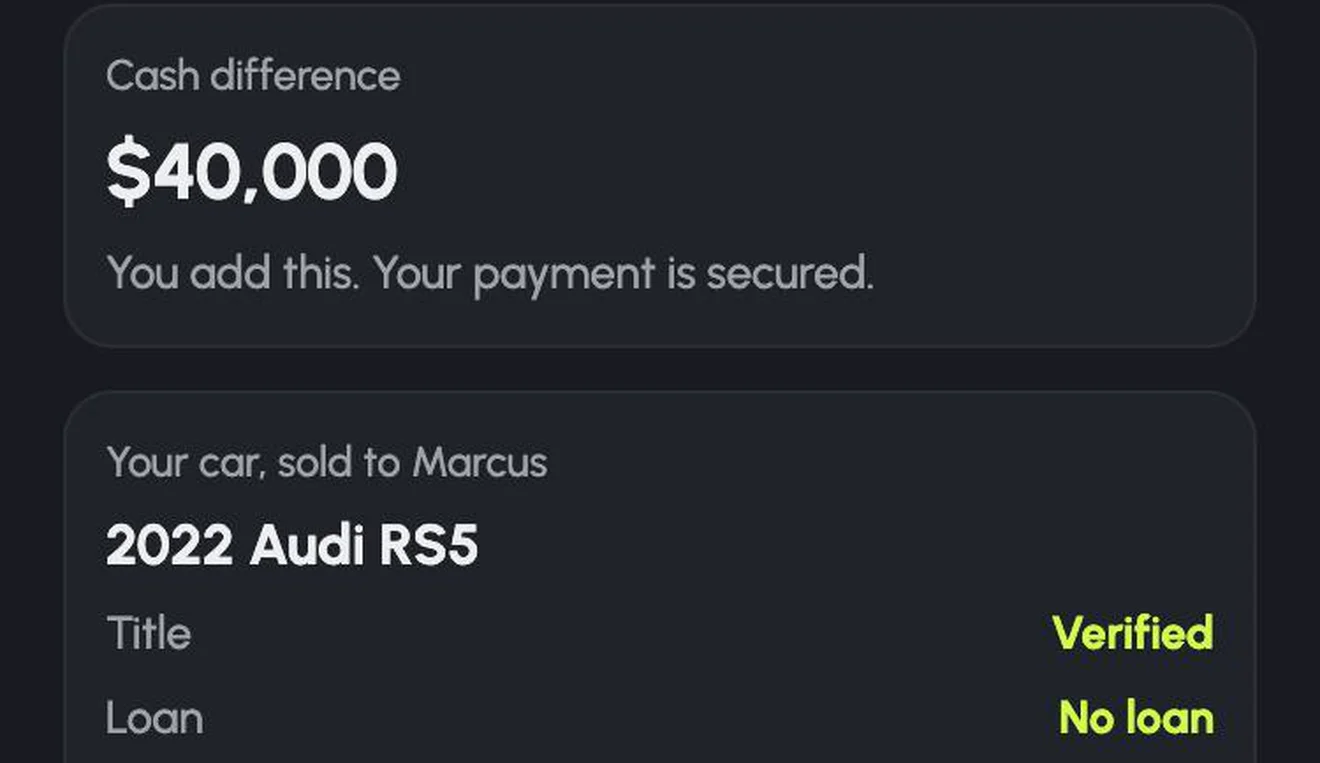
The money: you add cash. The advantage over a dealer is that your car goes in at private-party value and theirs comes to you at private-party value too, so the cash you add is usually much less than the dealer gap. See the worked example.
Watch out for: stretching too far. Decide your maximum cash difference up front and stick to it.
Trading down
The story: you want to free up money, lower your insurance, or stop worrying about parking an expensive car.
The money: you receive cash. Trading down to an owner who's trading up can be a clean way to release equity without selling and buying separately.
Watch out for: loans. If you still owe money on your car, the payoff has to be part of the deal. See Can you trade a car you still owe money on?
Trading sideways
The story: you're not after a better car, just a different one. Three years with a German sedan and you want to try a Japanese sports car. You've done the manual thing and want an automatic for traffic. You want to try an Audi wagon after a BMW.
The money: often close to even. These are the trades that feel most like the enthusiast ideal: two people trading keys and both driving off excited.
Watch out for: specs that matter to you. If the other car's options and condition are what make it special, get them confirmed in the inspection.
How Shifta finds the other owner
Each of these stories needs two people whose situations fit together. Shifta's preferences are designed to describe yours, then find the people whose preferences fit:
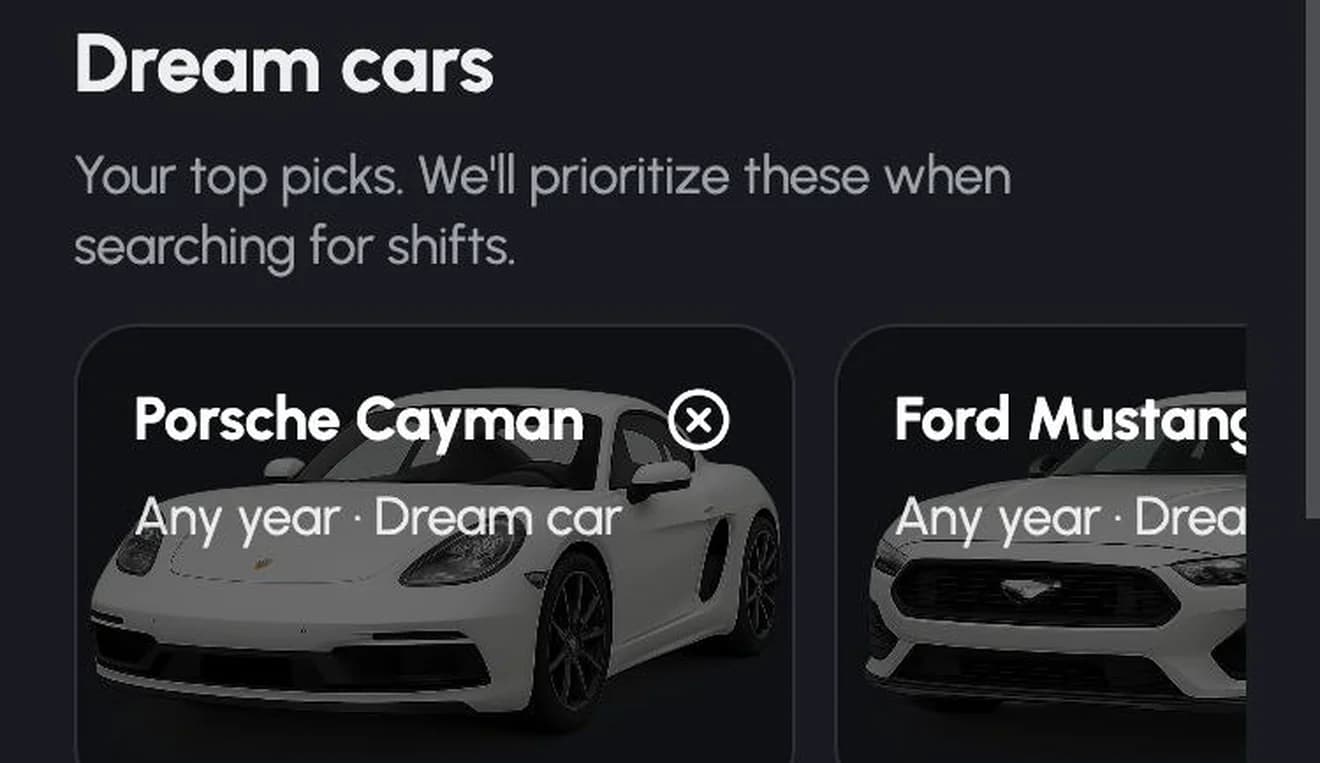
- "I know what I want": pick specific dream cars and alternatives.
- "I'm open to options": choose body styles and brands you like.
- "Surprise me": let Shifta suggest cars, from conservative to adventurous.
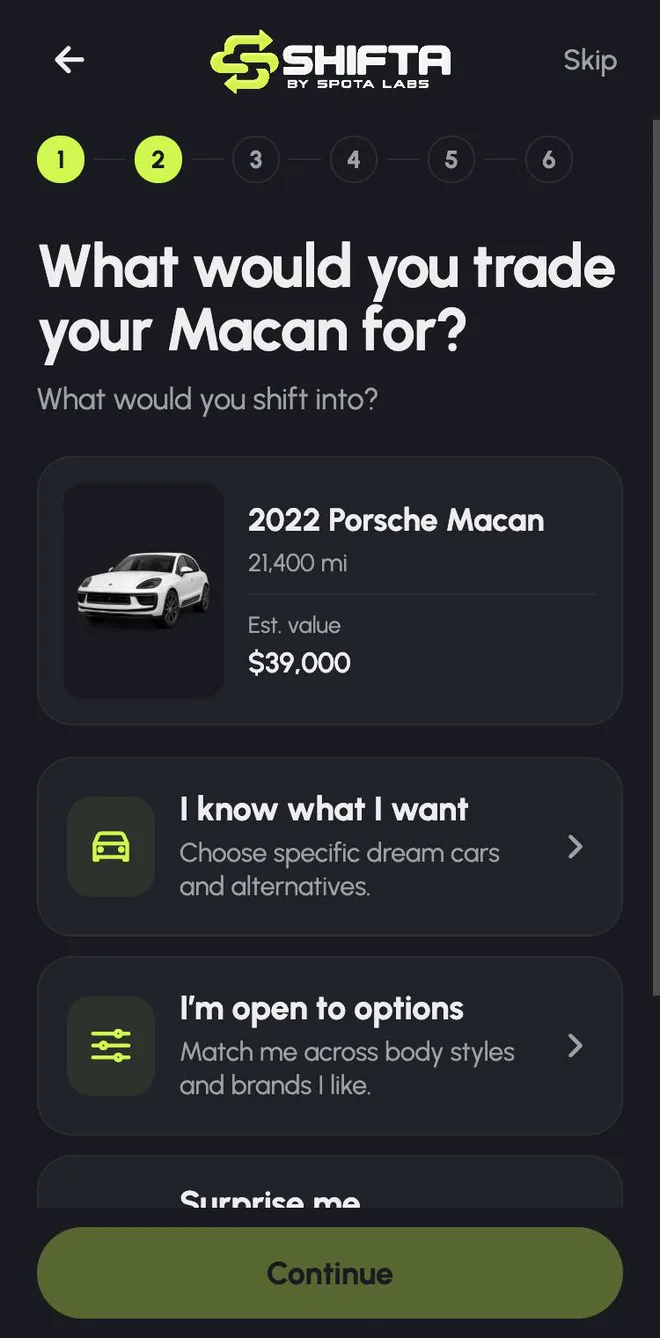
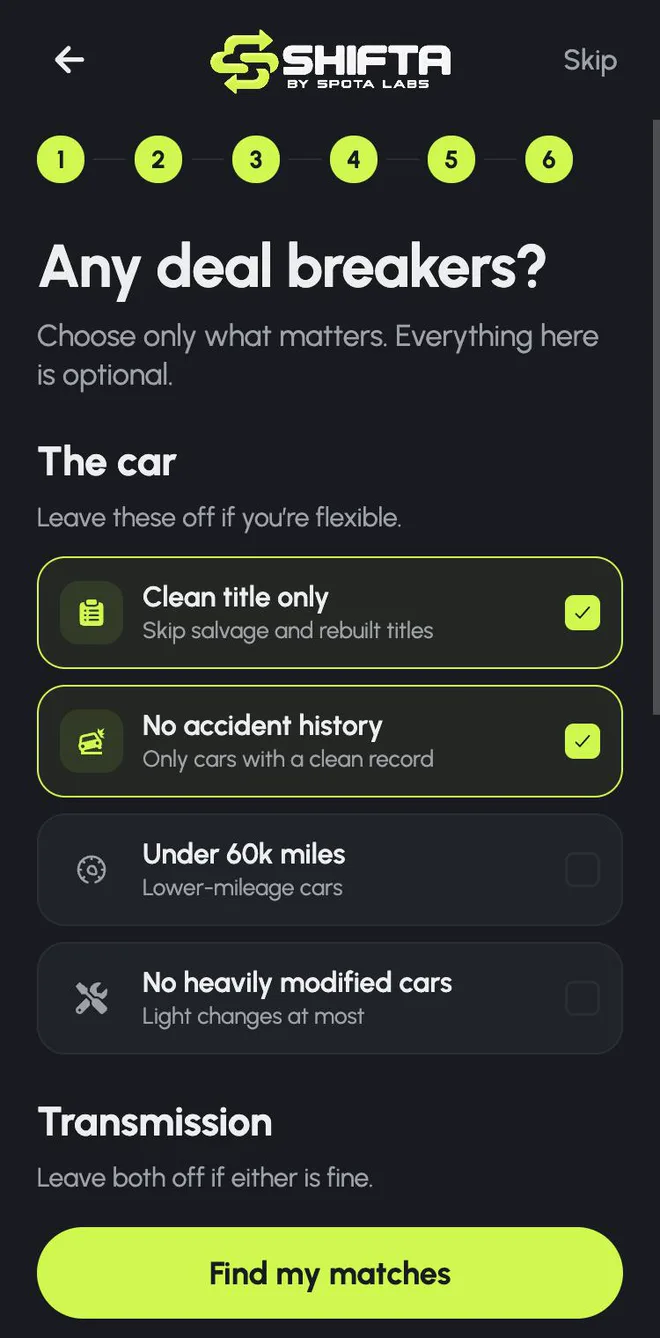
Add how much cash you'd add or take, how far you'd travel and your deal breakers, and Shifta shows owners whose cars fit, and who want a car like yours.
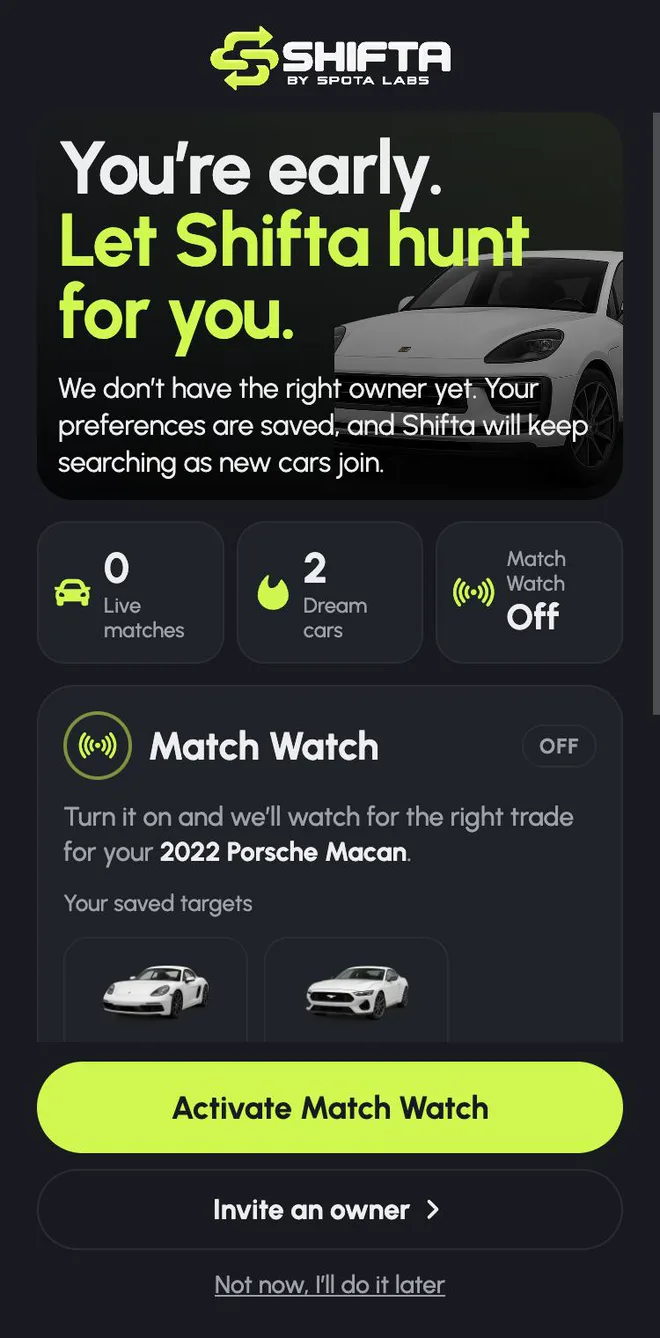
If nobody's there yet, Match Watch keeps searching as new owners join and tells you when the right trade appears.
Start with the basics: How to trade your car for another car without a dealer.
- shifta
- car trade
- use cases
- guide
ShiftaSkip the sale. Trade into your next car.